




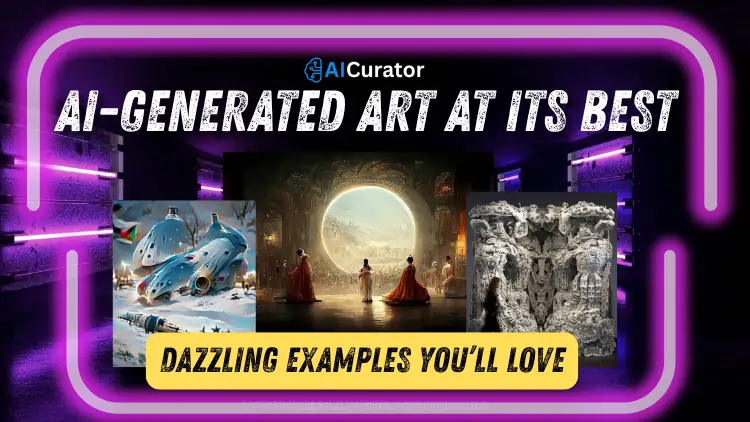
Generative AI art is reshaping creativity, moving far beyond simple digital tools to algorithms capable of crafting stunning visuals from mere text prompts. This new art form blends human imagination with machine intelligence, creating a truly groundbreaking artistic movement.
In this article, we explore 10 mind-blowing examples of AI-generated art that demonstrate the incredible potential of this technology to redefine what art means in the 21st century. From surreal portraits to impossible landscapes, these creations reveal the fascinating future of artistic expression.
Understanding the Creative Algorithm | How Generative AI Crafts Artwork
Generative AI crafts artwork using neural networks trained on massive datasets of images and text. This allows the AI to learn visual concepts and patterns. When a user provides a prompt, the AI image generator synthesizes a new, original image.
Two primary models drive this creative process:
Amazing Examples of AI-Generated Art in 2025
| Examples of AI-Generated Art | Core Concept | Impact 🚀 |
|---|---|---|
| Edmond de Belamy | Fictional AI Portrait | First AI Auction |
| The Next Rembrandt | AI-Created Masterpiece | Deconstructed Genius |
| Théâtre D’opéra Spatial | Award-Winning AI Art | Sparked Mainstream Debate |
| Artificial Realities | Data Sculpture | Environmental Storytelling |
| AI Nude Portrait #1 | Abstract AI Figures | Machine's Raw View |
| AI Spaceships Series | Narrative World-Building | Cohesive AI Story |
| Indian Mona Lisa | Cultural Reimagination | Democratized Classic Art |
| Digital Grotesque | Algorithmic Sculpture | Pushed Physical Limits |
| Neural Zoo | Speculative Life Forms | Alternate Evolution |
| Avocado Armchair | Creative Concept Fusion | Viral AI Power |
1. Portrait of Edmond de Belamy
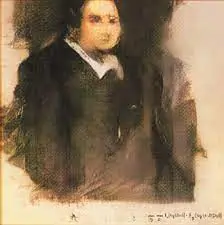
You can't talk about AI art without mentioning the one that started it all. In 2018, the Parisian art collective Obvious created the Portrait of Edmond de Belamy.
They trained a Generative Adversarial Network (GAN) on 15,000 portraits from the 14th to the 19th centuries, resulting in a, slightly blurred portrait of a fictional man.
What makes it so special? It was the first piece of AI-generated art to be sold at Christie's, a world-famous auction house. Expected to sell for around $10,000, it fetched a staggering $432,500. This sale was a watershed moment, forcing the traditional art world to sit up and take notice. It proved that AI art had not only artistic merit but also serious commercial value.
2. The Next Rembrandt
What if you could bring a master back to life to paint one more masterpiece? That was the idea behind The Next Rembrandt. This ambitious project didn't just mimic Rembrandt's style; it sought to create a completely new painting as if he had painted it himself.
A team of developers, data scientists, and art historians fed an AI 346 of Rembrandt's paintings. The system analysed everything—from his brushstrokes and use of light to the typical facial features of his subjects.
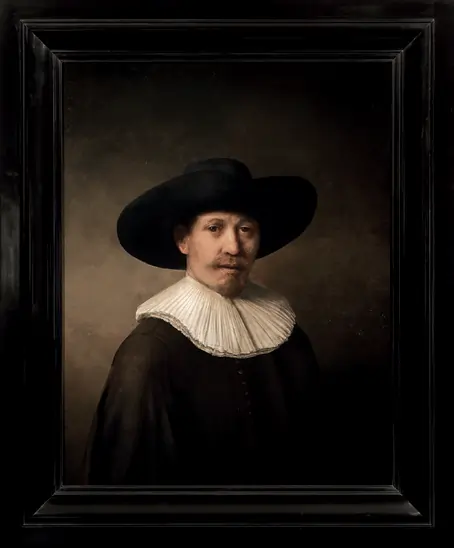
The result was a stunningly authentic, 3D-printed painting of a man in 17th-century attire that looks, for all intents and purposes, like a long-lost Rembrandt. It’s a brilliant example of how AI can be used to study and deconstruct artistic genius.
3. Théâtre D’opéra Spatial (Space Opera Theatre)
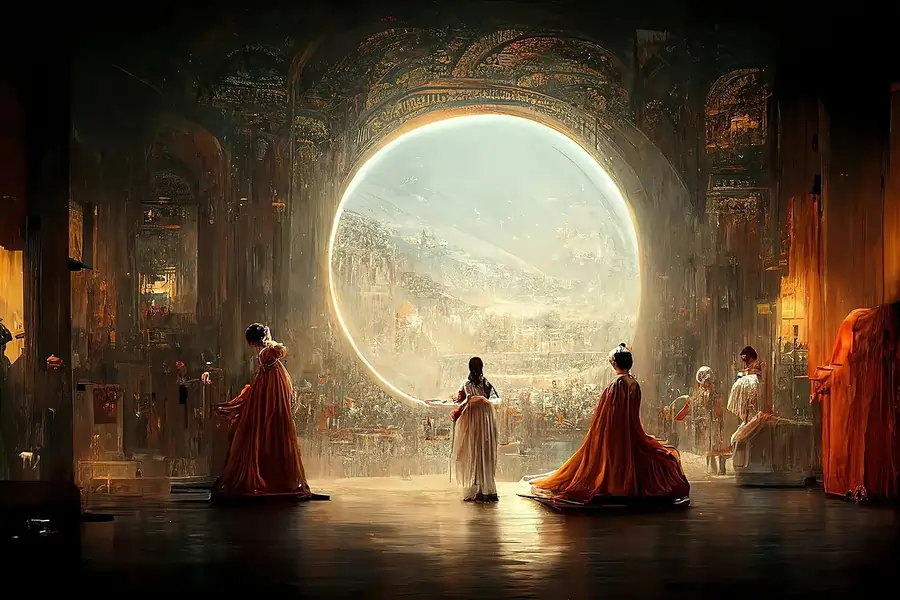
This piece is famous, or perhaps infamous, for winning first place in the digital art category at the 2022 Colorado State Fair.
Created by game designer Jason Allen using Midjourney, the artwork is a breathtaking scene of figures in baroque-style gowns staring out at a vast, luminous vista.
The win sparked a massive debate online. Was it fair for an AI-generated piece to compete against human-made digital art?
Allen argued that his skill lay in the prompt engineering—the careful crafting of the text prompt and the selection of the final image from hundreds of variations. Théâtre D’opéra Spatial is a key example because it brought the conversation about AI in creative competitions into the mainstream, raising important questions about authorship and skill in the age of AI.
4. Artificial Realities by Refik Anadol
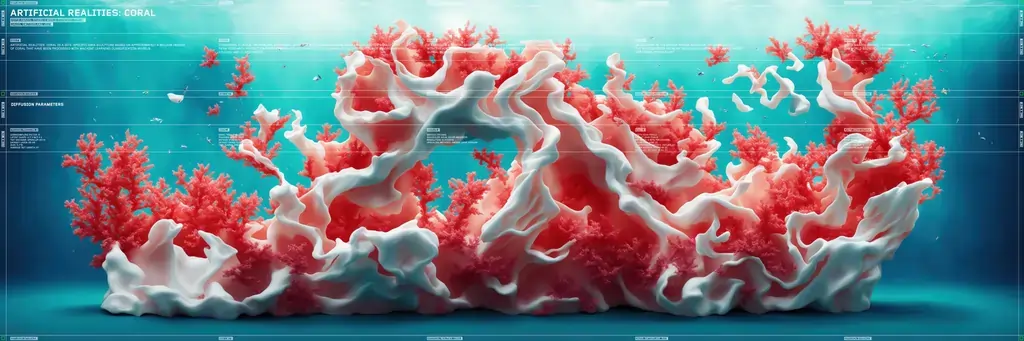
Refik Anadol is an artist who doesn't just create images; he builds entire worlds out of data. His work, Artificial Realities: Coral, is a perfect example of this. Commissioned by the World Economic Forum, Anadol used a dataset of millions of coral images to create a vast, flowing, and immersive 3D data sculpture.
The piece is a powerful statement about climate change, using the beauty of AI to highlight the fragility of our planet's coral reefs. Anadol’s work moves AI art beyond the screen, turning it into large-scale public installations that surround the viewer. His projects show that AI can be a tool for powerful storytelling and data visualization on a monumental scale.
5. AI-Generated Nude Portrait #1 by Robbie Barrat
Long before AI art went mainstream, a young researcher named Robbie Barrat was experimenting with GANs in fascinating ways. In 2018, he trained a neural network on thousands of classical nude portraits.
The result, AI-Generated Nude Portrait #1, was not a realistic figure but a distorted, fleshy, and abstract form that resembled something between a Francis Bacon and a Salvador Dalí painting.
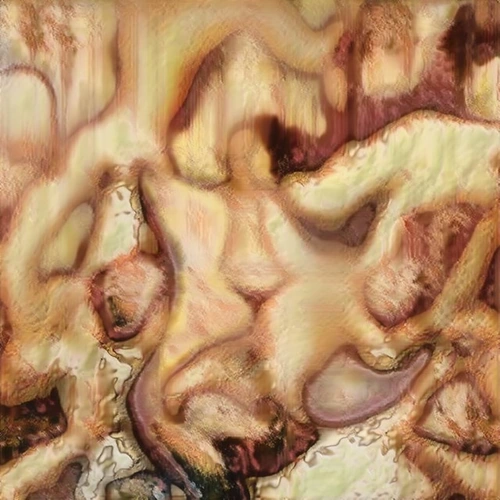
This piece is mind-blowing because it reveals the AI's “thought process.” The algorithm struggled to grasp the human form, resulting in a surreal and somewhat unsettling interpretation. It's a raw look at how a machine sees us, and it proved to be a hit in the emerging crypto art market, selling for a significant sum on SuperRare.
6. AI Spaceships by Anne Spalter
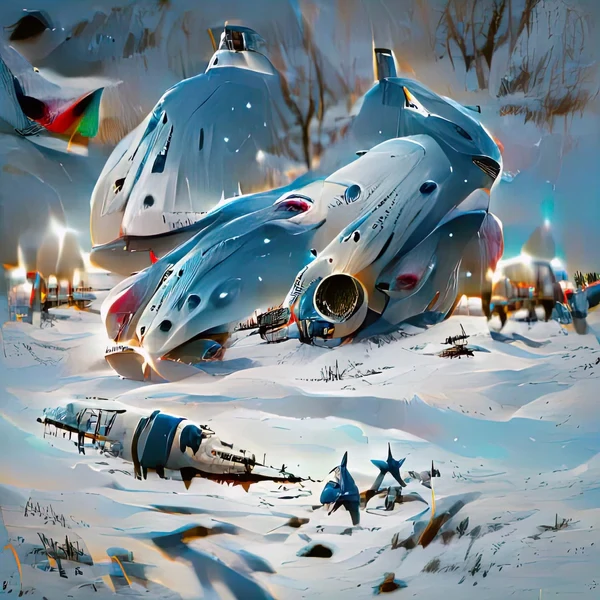
AI art isn't just for single images; it can be used for world-building and narrative. Artist Anne Spalter’s AI Spaceships series is a fantastic illustration of this.
Using the NightCafe AI art generator, she created a fleet of imaginative spaceships, each with its own unique style, from steampunk to psychedelic.
What's compelling here is the story she built around them. The series follows humanity's desperate flight from an uninhabitable Earth, with ships getting lost in time or battling strange new lifeforms. It’s a great example of how an artist can guide an AI tool to produce a cohesive body of work that tells a complex story, turning simple text prompts into an entire science fiction epic.
7. The Indian Mona Lisa by Rashi Pandey
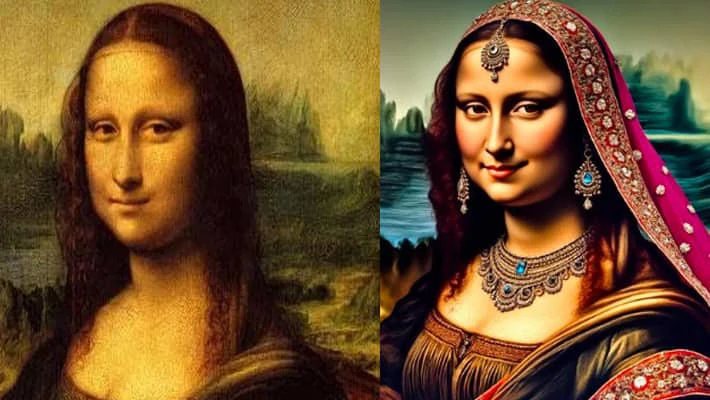
How do you reinterpret one of the most famous paintings in history? Delhi University student Rashi Pandey did it with AI. She used generative tools to reimagine Leonardo Da Vinci’s Mona Lisa as an Indian woman, dressed in traditional attire and jewellery.
The image quickly went viral, capturing the imagination of social media users who suggested names like “Shona Lisa” and “Lisa Ben“. This artwork is a brilliant example of how AI can be used for cultural reimagination. It democratises art history, allowing creators to remix and reinvent classic works to reflect their own heritage and identity. It shows that AI is not just for creating new things but also for seeing old things in a completely new light.
8. Digital Grotesque by Michael Hansmeyer and Benjamin Dillenburger
This isn't a painting or a digital file; it's a full-blown, 3D-printed sculpture that would be impossible to create by hand. Digital Grotesque is a grotto-like architectural folly designed by an algorithm.
The creators, Michael Hansmeyer and Benjamin Dillenburger, developed a process that generates incredibly intricate and complex forms, resulting in a structure that looks both organic and alien.
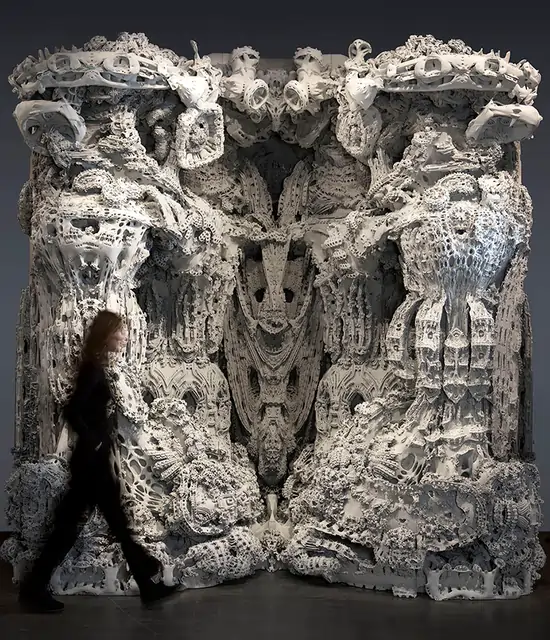
With over 260 million individual facets, the level of detail is beyond human capability. This project pushed the boundaries of what is physically possible in architecture and sculpture. It demonstrates that AI can be a partner in creation, designing forms so complex that they challenge our very understanding of design and construction.
9. Neural Zoo by Sofia Crespo
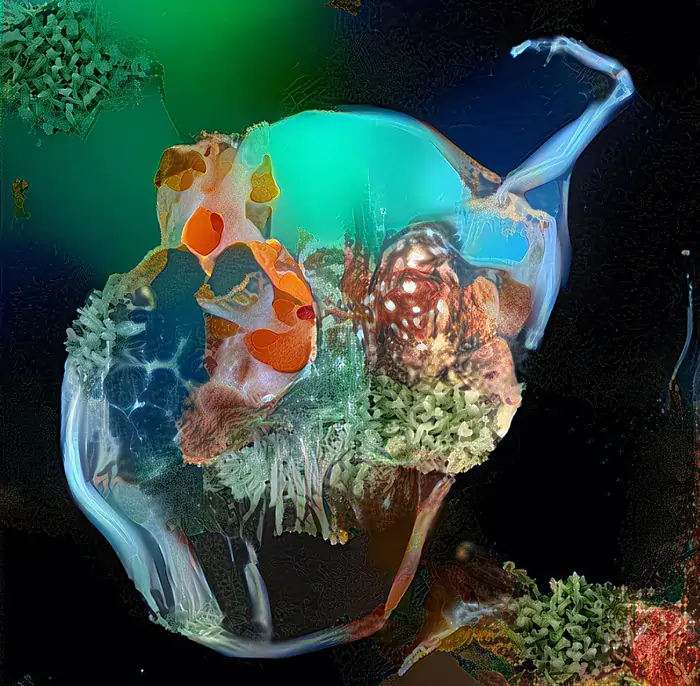
Artist Sofia Crespo uses AI to explore the natural world, but not the one we know. Her project, Neural Zoo, uses neural networks to generate “speculative life forms“—hybrid creatures that look like they could be from another planet or a deep-sea trench.
She generates images and animations of bizarre insects and otherworldly sea creatures that blur the line between the organic and the artificial.
Crespo's work is fascinating because it touches on the very nature of creativity. She sees the AI as a collaborator in exploring life's potential, generating creatures that don't exist but biologically could. It's a beautiful and slightly eerie glimpse into an alternate evolutionary path, crafted by a machine's imagination.
10. Avocado Armchair
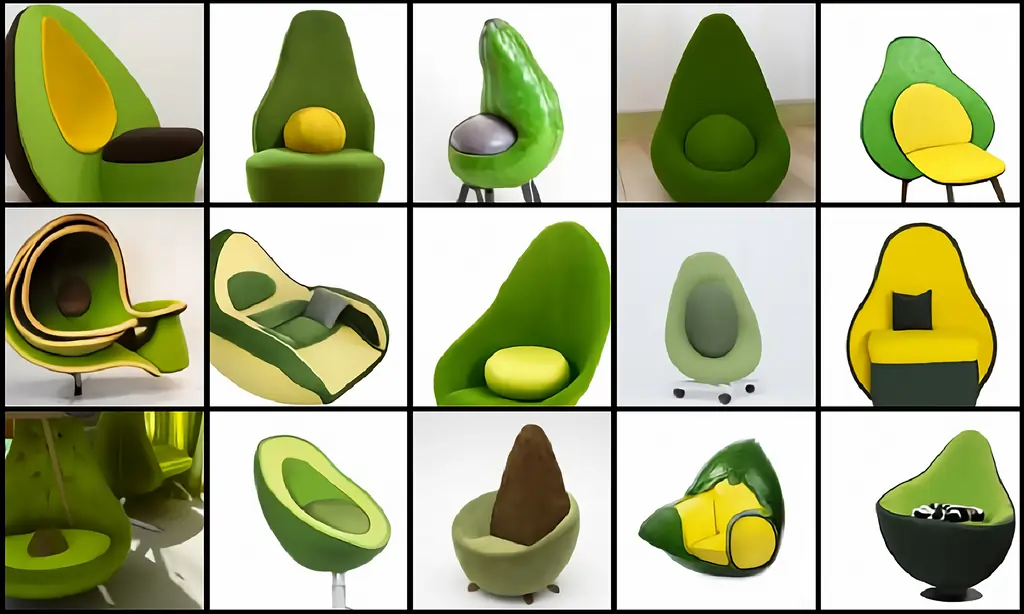
Sometimes, the most mind-blowing examples are the ones that are just plain fun. When DALL-E 2 was first unveiled, one of the images that went viral was a series of “avocado armchairs.” The prompt was simple, and the results were brilliant: armchairs designed to look exactly like avocados, complete with a pit-like cushion.
This example, while whimsical, perfectly showcased the power of text-to-image generation. It proved that AI could understand and creatively combine two completely unrelated concepts—”avocado” and “armchair”—into a coherent and stylish product design. It was a lighthearted demonstration that captured the public's imagination and made millions of people realise just how powerful these new creative tools were.
How to Create Your Own AI-Generated Art | Top Tools and Platforms
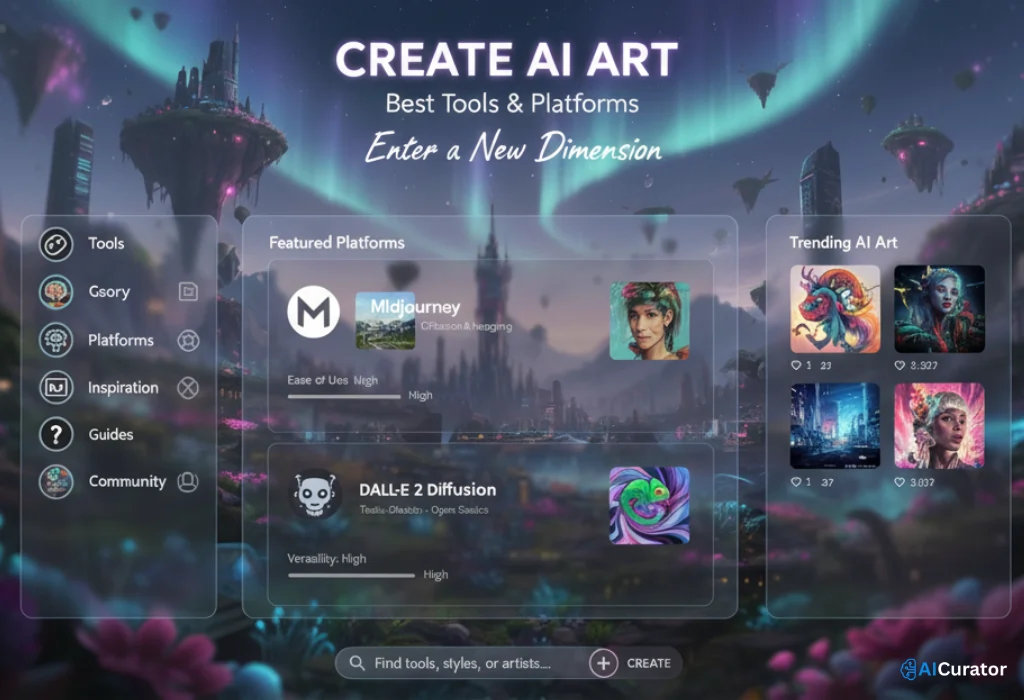
Creating AI-generated art is now easy and accessible with a variety of powerful platforms, each offering unique strengths. Crafting detailed, clear text prompts ensures the AI image generator captures the creative vision accurately. The precision of these prompts directly shapes the quality and style of the AI artwork produced.
Here are the top tools for getting started:
The Unstoppable Rise of AI-Generated Art
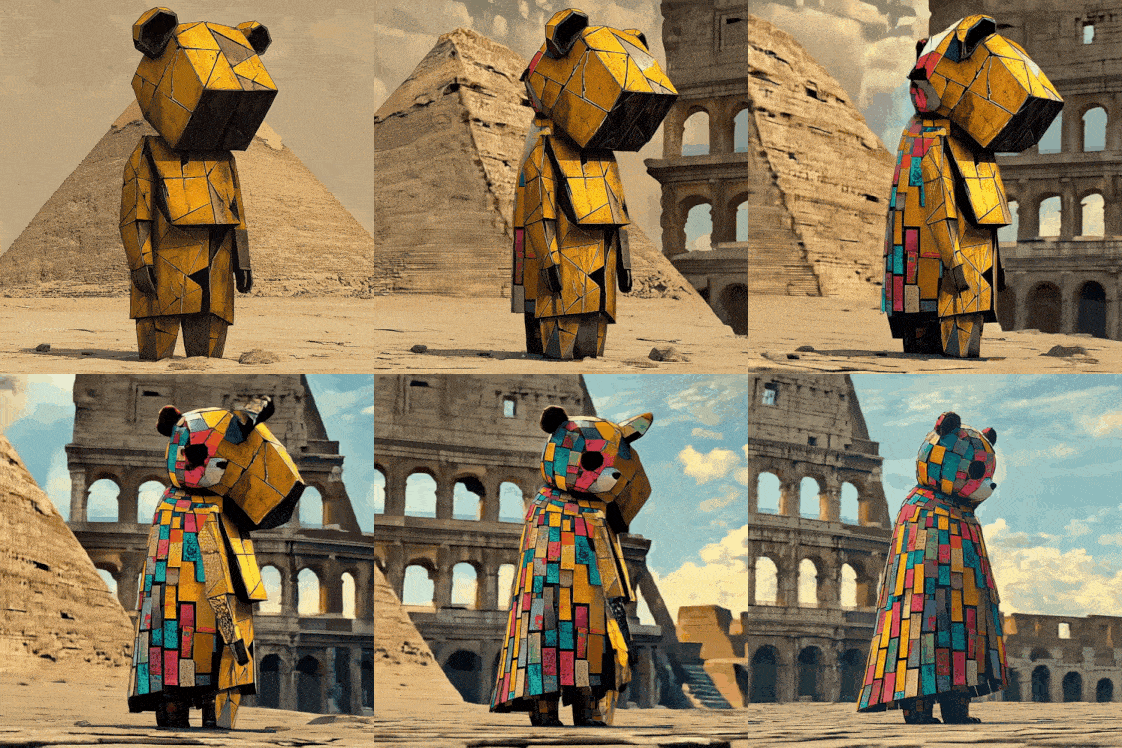
In wrapping up, it's clear that AI-generated art is reshaping our creative world.
These examples show how artificial intelligence serves as a powerful collaborator, enabling the creation of everything from hyper-realistic portraits to impossible sculptures.
This partnership between human vision and machine intelligence opens up a new frontier for expression.
Whether you're an artist, a designer, or simply curious, the world of generative art offers endless possibilities. What will you create? Share your thoughts below.

Recommended Readings: