



Sifting through dozens of academic articles is a monumental task. Many so-called “AI research paper summarizers” promise a shortcut but often deliver shallow summaries that miss crucial data or invent findings entirely. They can sound convincing but lack the scholarly precision required for serious academic work.
To find what actually works, our team tested and evaluated over 30 of these AI tools to separate the genuinely useful from the unreliable. Our ranking focuses on what truly matters for students and researchers: summarization accuracy, correct citation handling, and the ability to identify key methodologies and conclusions accurately.
The Role of AI Summarizers in Understanding Academic Research
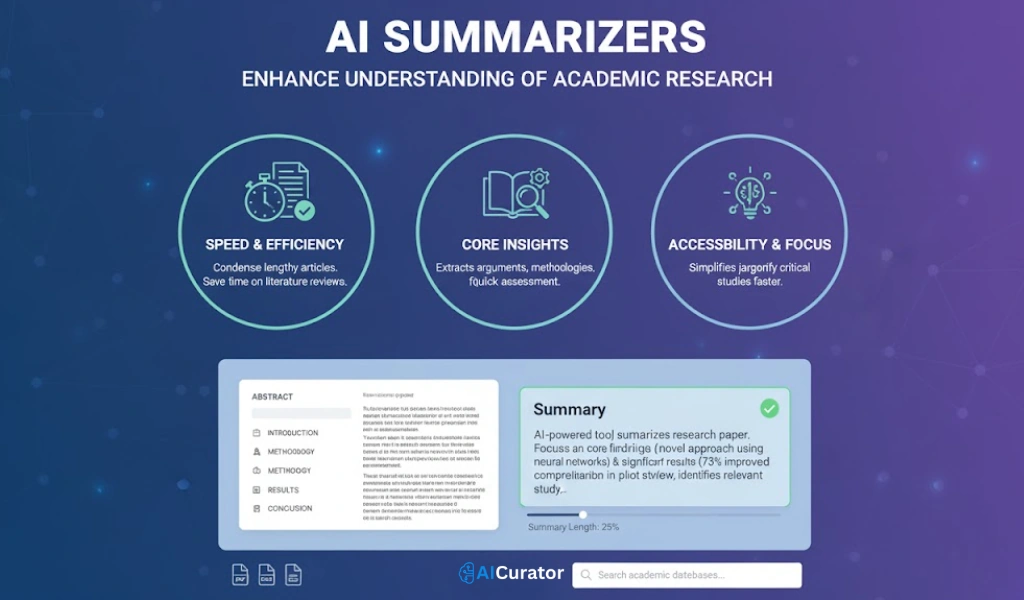
AI summarizers play a pivotal role in making academic research more accessible and efficient. These tools are designed to condense lengthy, complex scholarly articles into shorter, more digestible formats. By extracting the core arguments, methodologies, and findings, they allow users to quickly assess a paper's relevance to their work.
This saves a significant amount of time that would otherwise be spent on manually reading entire documents. For students and researchers, AI-powered summarization helps accelerate the literature review process.
Instead of getting bogged down in technical jargon, a user can get a high-level overview of a paper's key contributions. This quick comprehension allows them to cover more ground and identify the most critical studies in their field of interest, leading to more productive and focused research efforts.
Smart Tools for Effortless AI Research Paper Summaries
| AI Research Paper Summarizers📝 | Key Features 🌟 | Primary Focus 🎯 |
|---|---|---|
| Elicit | Structured data extraction | Systematic literature reviews |
| SciSpace | AI chat with PDFs | Integrated research workflow |
| Consensus | AI-powered answers | Evidence-based search results |
| ResearchRabbit | Visual research maps | Literature discovery tool |
| SciSummary | Summarizes figures, tables | Precise scientific summaries |
| Paperguide | AI writing assistant | All-in-one student platform |
| Semantic Scholar | One-sentence “TLDRs” | Rapid paper screening |
| Scholarcy | Interactive summary cards | Building a summary library |
1. Elicit
Elicit acts as your personal AI research assistant, designed to automate the heavy lifting in literature reviews. It goes beyond simple keyword searches, using semantic search to find relevant papers across a vast database of over 138 million articles. This allows you to uncover critical studies you might have otherwise missed.
This tool is engineered to streamline complex research tasks. Elicit can extract key data from papers and organize it into structured tables, making it easier to compare findings and synthesize information. It’s a powerful asset for anyone undertaking a systematic review or in-depth analysis.
Elicit Pros
Elicit Cons
⭐ Best for: Researchers and academics performing comprehensive and systematic literature reviews.
2. SciSpace
SciSpace (now integrated into Typeset) provides a unified platform that covers your entire research journey. From discovering new papers to writing and formatting your manuscript, it offers a seamless workflow. It’s more than a summarizer; it's a complete academic ecosystem.
Its standout feature is the AI “Copilot,” which can analyze and explain complex text, mathematical equations, and tables within a paper. You can ask questions and get instant, citation-backed answers, making it an invaluable tool for decoding dense academic content and accelerating your understanding.
SciSpace Pros
SciSpace Cons
⭐ Best for: Academics and labs wanting an integrated solution from discovery to publication.
3. Consensus
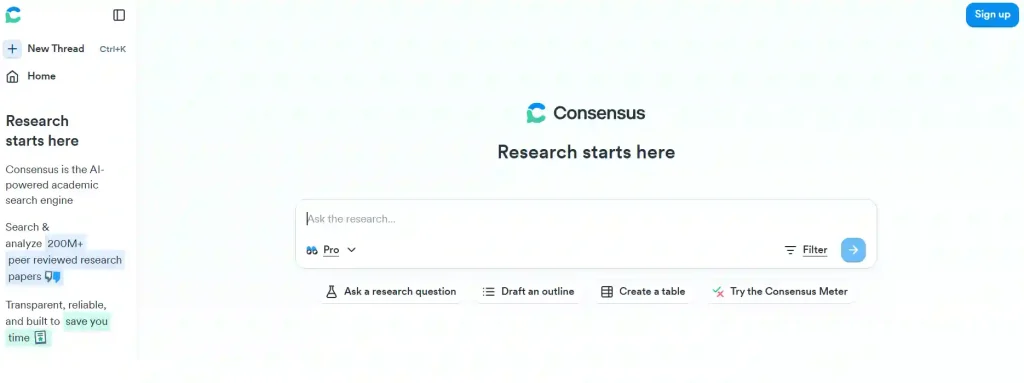
Consensus functions as an AI-powered search engine that delivers evidence-based answers directly from scientific research. Instead of just providing a list of papers, it synthesizes findings from multiple studies to answer your questions directly, making it incredibly efficient for fact-checking and initial exploration.
Its unique “Consensus Meter” gives you a quick visual summary of what the scientific community says about a topic. This feature is perfect for quickly gauging the level of agreement or disagreement on a research question, saving you hours of reading and analysis.
Consensus Pros
Consensus Cons
⭐ Best for: Students and professionals who need quick, reliable, evidence-based answers.
4. ResearchRabbit
ResearchRabbit takes a novel approach to literature discovery, often described as “Spotify for papers.” You start with a few seed papers, and it intelligently suggests new and relevant articles, helping you uncover threads of research you might not find through traditional search methods.
Its strength lies in visualization. The tool creates interactive graphs of paper networks and co-authorships, allowing you to visually explore the academic landscape. This makes it a fantastic tool for understanding how different research areas connect and identifying key authors in a field.
ResearchRabbit Pros
ResearchRabbit Cons
⭐ Best for: Researchers and graduate students exploring new topics or mapping a field.
5. SciSummary
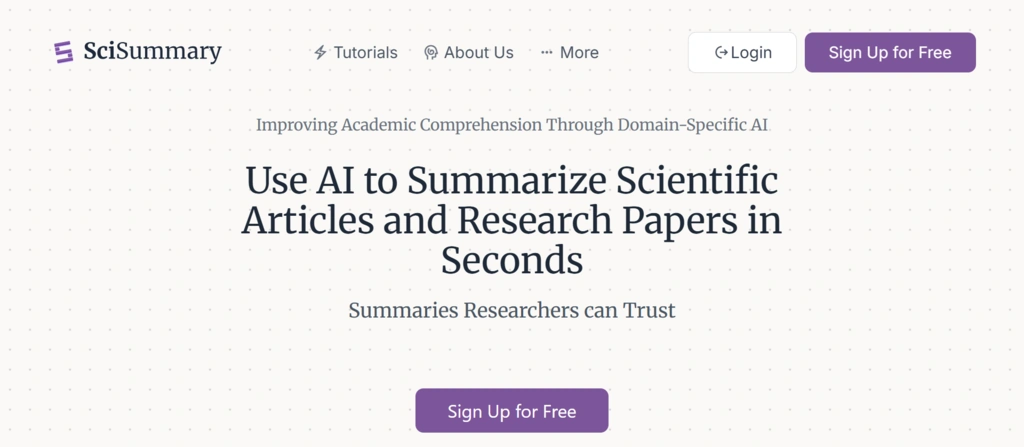
SciSummary is purpose-built for summarizing scientific and academic articles, distinguishing itself from general-purpose AI like ChatGPT. It understands the structure of research papers and provides summaries broken down into logical sections like abstract, methods, results, and conclusions.
This tool is designed for serious researchers. It supports summarizing documents in bulk and even allows you to “chat” with figures and tables to clarify data points. This domain-specific approach ensures that the summaries are not only accurate but also highly relevant to an academic workflow.
SciSummary Pros
SciSummary Cons
⭐ Best for: Academics and researchers needing detailed, structured summaries of papers.
6. Paperguide
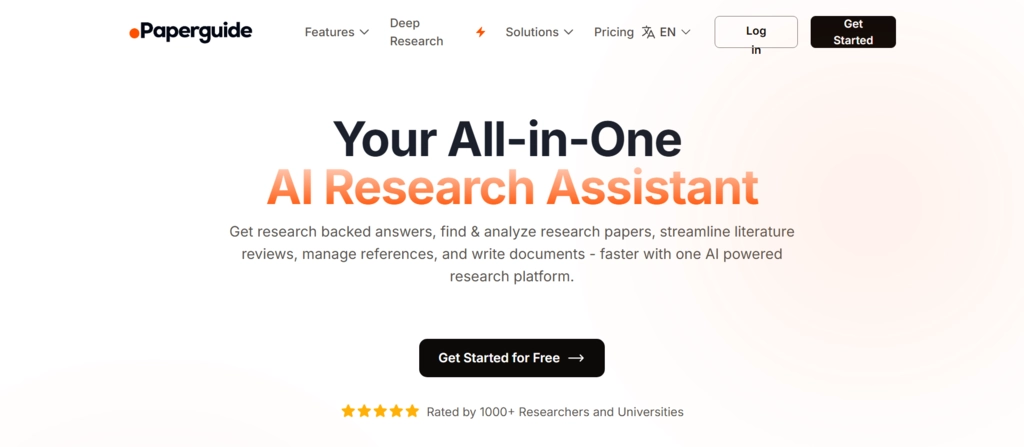
Paperguide positions itself as a comprehensive AI research assistant, capable of handling your entire literature review process. It can find papers, analyze them, and generate detailed, citation-backed answers to your research questions, effectively turning weeks of work into minutes.
A key feature is its ability to compare multiple papers by extracting key data into structured formats. This allows for efficient analysis of trends and contradictions across studies. It even helps you generate drafts for your own writing, maintaining academic integrity by citing every piece of information.
Paperguide Pros
Paperguide Cons
⭐ Best for: Graduate students and research teams managing complex literature analysis projects.
7. Semantic Scholar
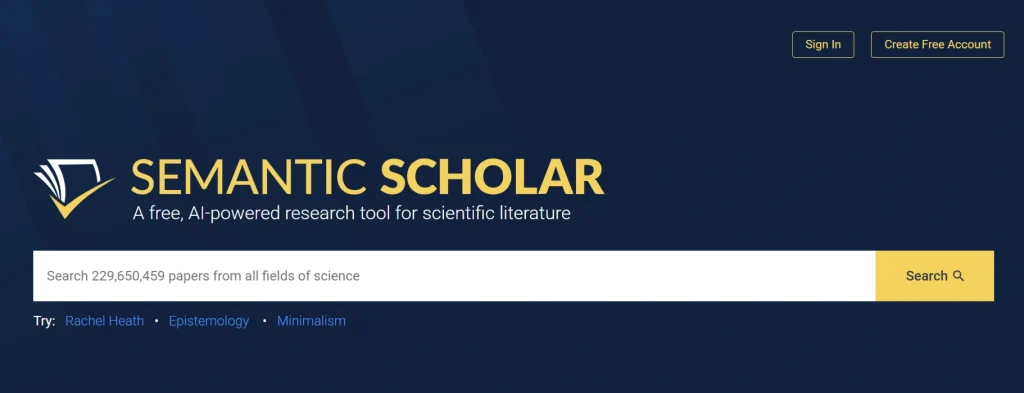
Semantic Scholar is a free, AI-powered research tool from the Allen Institute for AI, providing access to a massive database of over 200 million scientific papers. It enhances the search process by using AI to identify relevant papers and provide context around citations and influence.
Its innovative “Semantic Reader” offers an augmented reading experience, making dense papers more accessible by providing background information on-demand. While not a direct summarizer in the same vein as others, its powerful search and analysis tools are indispensable for any researcher on a budget.
Semantic Scholar Pros
Semantic Scholar Cons
⭐ Best for: Students and researchers needing a powerful, free tool for paper discovery.
8. Scholarcy
Scholarcy transforms lengthy research papers, articles, and even videos into interactive “summary flashcards.” This unique format makes it incredibly easy to digest complex information quickly. The tool automatically highlights key phrases, extracts important concepts, and pulls out all references.
It's designed to fit seamlessly into your workflow. You can import files from anywhere—your browser, a folder of PDFs, or directly from Zotero. Scholarcy then creates a structured, consistent format for you to read and analyze, making it the perfect tool for organizing your reading and refreshing your memory.
Scholarcy Pros
Scholarcy Cons
⭐ Best for: Students and professionals who need to quickly digest and organize information.
How AI Research Paper Summarizers Ensure Scholarly Precision?
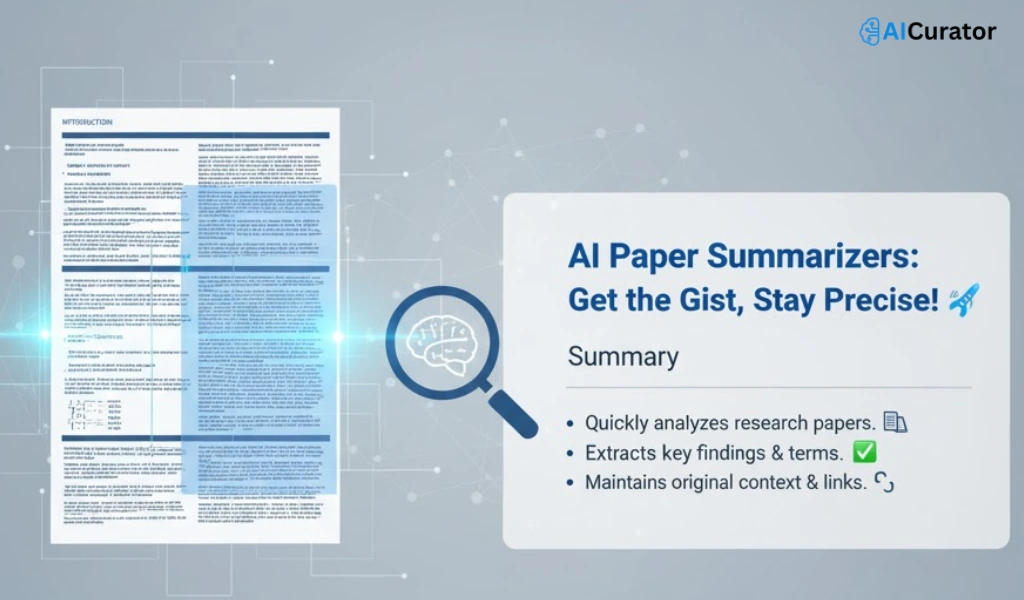
AI research paper summarizers use advanced natural language processing (NLP) to analyze the structure and content of academic texts, allowing them to produce accurate, reliable summaries. These algorithms are trained to identify the most important sections of a paper, such as the introduction, methods, results, and conclusion.
They focus on extracting sentences and phrases that convey the main ideas and arguments, rather than just picking random text. To maintain accuracy, these tools prioritize preserving the original context and technical terminology.
They can differentiate between background information and key findings, ensuring the generated summary accurately reflects the paper's core contributions. Many advanced summarizers also provide links back to the original source material, allowing users to verify the information and explore specific points in greater detail, which is essential for maintaining academic integrity.
Streamline Your Research

In summary, AI research paper summarizers are invaluable assets for students, academics, and professionals.
These tools provide a reliable way to quickly understand dense scholarly articles by distilling core arguments, methodologies, and findings into concise overviews. They are designed to enhance productivity, not replace critical analysis, allowing you to focus on the most relevant literature.
By using these powerful AI assistants, you can streamline your literature review process and stay ahead in your field. Explore the options discussed to find the right tool that fits your academic workflow.

Recommended Readings: