








Struggling to turn your data into real-world results? You're not alone. The journey from concept to a deployed machine learning model is filled with hurdles like messy data and complex workflows. This is where the right machine learning software makes all the difference.
In this article, we break down the top 10 machine learning Software and platforms for 2025. We'll help you find the perfect solution to automate tasks, simplify development, and unlock the true power of your data. Let's find the AI software to drive your success.
What is Machine Learning Software and Why is it Important for Business?

Machine learning software is a category of tools and platforms that give computer systems the ability to learn from data, identify patterns, and make decisions with minimal human intervention. Instead of being explicitly programmed for every task, this software uses statistical algorithms to analyse large datasets, “learn” from them, and improve its accuracy over time.
For businesses, its importance lies in turning raw data into actionable insights. This technology is important because it automates complex processes, enhances decision-making, and creates a competitive advantage.
Companies use machine learning software to forecast sales, predict customer behaviour, reduce operational costs, and identify new market trends. Automating repetitive tasks allows employees to focus on more strategic work, boosting efficiency and productivity across the organisation.
Machine Learning Software Every Data Scientist Should Know
| Machine Learning Software | Key Functions | Application Highlights |
|---|---|---|
| Azure Machine Learning | AutoML, MLOps, Hybrid Cloud | Enterprise, Secure, Collaborative |
| TensorFlow | Neural Nets, Computer Vision | Deep Learning, Research |
| Amazon SageMaker | Managed ML, Generative AI | Scalable, Versatile, Cloud-native |
| Scikit-learn | Classification, Regression, Clustering | Beginners, Efficient, Pythonic |
| Google Cloud AI | Vertex AI, Pre-trained APIs | Unified, Fast, Scalable |
| PyTorch | Dynamic Graphs, Distributed Training | Flexible, Research-focused, Production |
| Keras | Fast Prototyping, Simple API | User-friendly, Modular, Quick |
| Dataiku | Visual ML, Collaborative | End-to-end, Business, Governance |
| Apache Spark MLlib | Big Data ML, Pipelines | Distributed, Scalable, Efficient |
| H2O.ai | AutoML, Interpretability, AI Apps | Fast, Accessible, Automated |
1. Azure Machine Learning
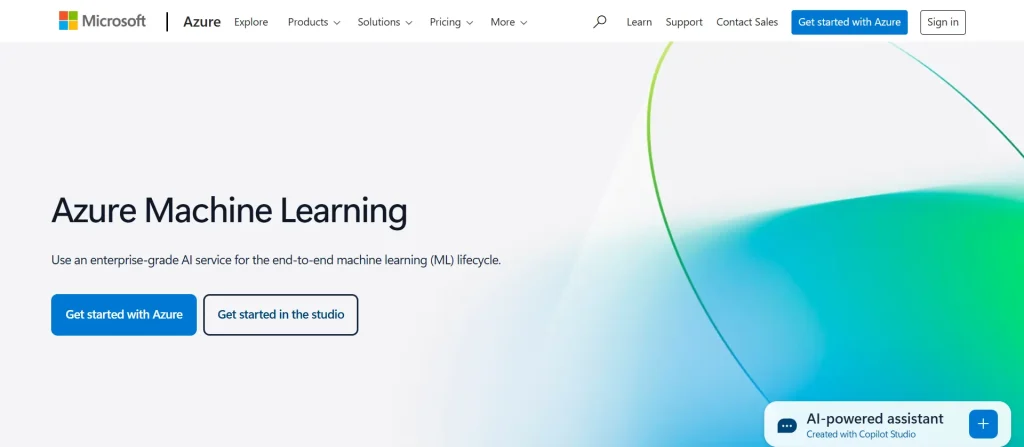
Azure Machine Learning is a comprehensive cloud service designed to accelerate the entire machine learning lifecycle. It caters to all skill levels, offering both a code-first experience with Python SDK and a no-code, drag-and-drop designer for visual workflow creation, making it a versatile AI software.
This platform is engineered for enterprises that demand a secure and scalable MLOps solution. It simplifies everything from data preparation to model deployment and management, enabling teams to collaborate seamlessly and bring AI-powered applications to market faster.
Azure Machine Learning Key Functions and Application
Why Choose:
Choose Azure Machine Learning for its enterprise-grade security, hybrid capabilities, and seamless integration with the broader Azure ecosystem.
2. TensorFlow
TensorFlow is an end-to-end open-source platform for machine learning, developed by Google. It stands as a pillar for developers and researchers building large-scale deep learning models, particularly in complex fields like natural language processing and computer vision.
Its flexible and comprehensive ecosystem simplifies the process of building and deploying models across various platforms, including servers, mobile devices, and browsers. TensorFlow provides a robust set of tools to support the entire machine learning workflow, from initial experimentation to production-level scaling.
TensorFlow Key Functions and Applications
Why Choose:
Choose TensorFlow for its robust production capabilities, extensive community support, and flexible architecture, which enable the building of state-of-the-art models.
3. Amazon SageMaker
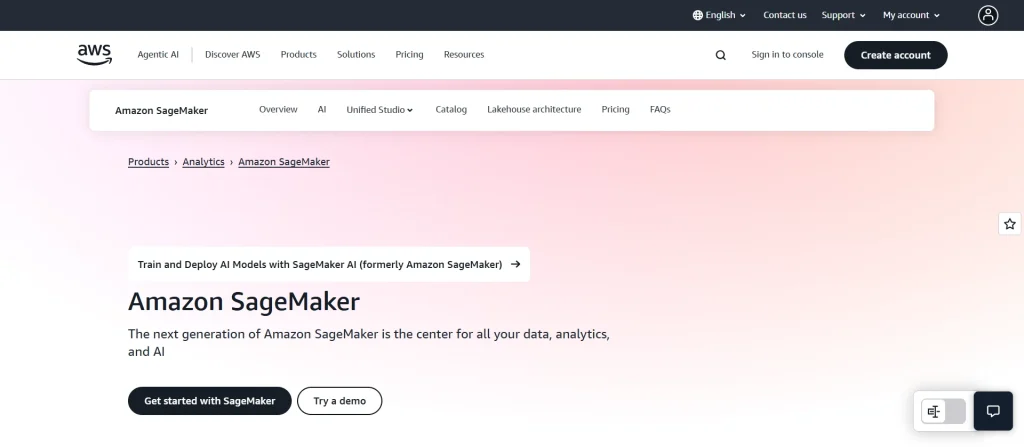
Amazon SageMaker is a fully managed service from AWS that empowers developers and data scientists to build, train, and deploy machine learning models with ease and at any scale. It removes the undifferentiated heavy lifting from each step of the machine learning process.
Aimed at a wide audience, from novices to experts, SageMaker offers an integrated suite of tools for data labelling, model building, and MLOps. Its scalable infrastructure and pay-as-you-go pricing make it a cost-effective and powerful choice for businesses of all sizes.
Amazon SageMaker Key Functions and Applications
Why Choose:
Choose Amazon SageMaker for its fully managed infrastructure, comprehensive toolset, and deep integration with the AWS ecosystem for unmatched scalability.
4. Scikit-learn
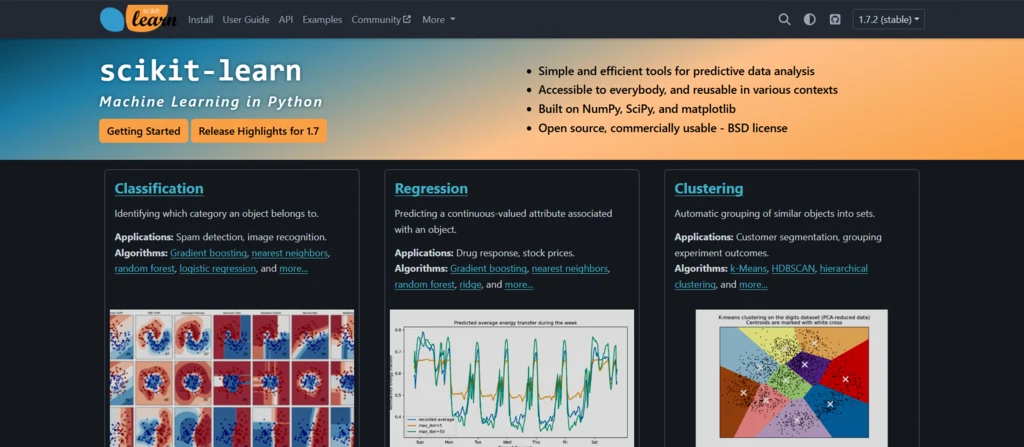
Scikit-learn is a free, open-source machine learning library for Python, celebrated for its clean API and outstanding documentation. It has become a staple for beginners and practitioners focusing on traditional machine learning tasks, data mining, and predictive data analysis.
Built upon foundational Python libraries like NumPy and SciPy, Scikit-learn provides a range of simple yet efficient tools. It serves as the ideal starting point for anyone looking to step into the world of machine learning and apply its core concepts.
Scikit-learn Key Functions and Applications
Why Choose:
Choose Scikit-learn for its user-friendly interface, comprehensive documentation, and robust implementation of classic machine learning algorithms.
5. Google Cloud AI
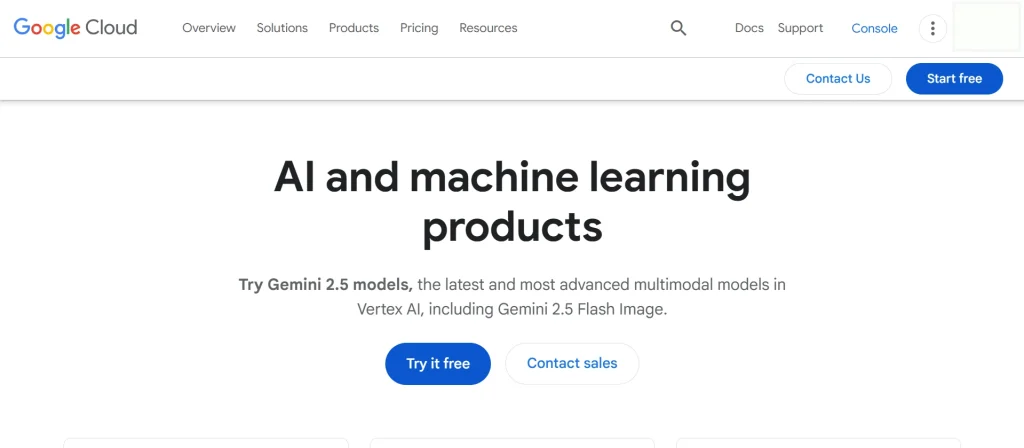
Google Cloud's AI Platform offers a unified suite of AI services designed to help businesses build and deploy cutting-edge machine learning models. It combines modern AI infrastructure, powerful pre-trained APIs, and a comprehensive platform to fast-track the development of AI applications.
Targeting developers, data scientists, and enterprises, this platform provides both code-based and no-code tools. Its flagship service, Vertex AI, simplifies the entire ML lifecycle, enabling teams to build, deploy, and manage models with greater speed and efficiency.
Google Cloud AI Key Functions and Applications
Why Choose:
Choose Google Cloud AI for its state-of-the-art AI infrastructure, powerful pre-trained APIs, and unified platform for simplified MLOps.
6. PyTorch
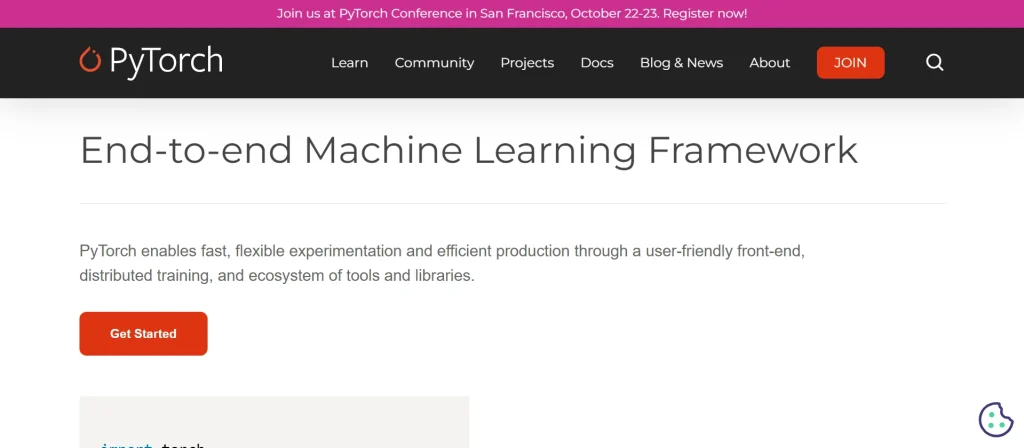
PyTorch is a premier open-source machine learning framework that smoothly bridges the gap from research prototyping to production deployment. Developed by Meta's AI Research lab, it is highly regarded by researchers for its flexibility, Python-first design, and dynamic computation graph.
This framework is exceptionally suited for deep learning projects requiring a high degree of customisation and rapid execution. PyTorch's vibrant community and rich ecosystem of tools make it a leading choice for building the next generation of AI models.
PyTorch Key Functions and Applications
Why Choose:
Choose PyTorch for its Python-native feel, dynamic neural networks, and strong support for both cutting-edge research and production environments.
7. Keras
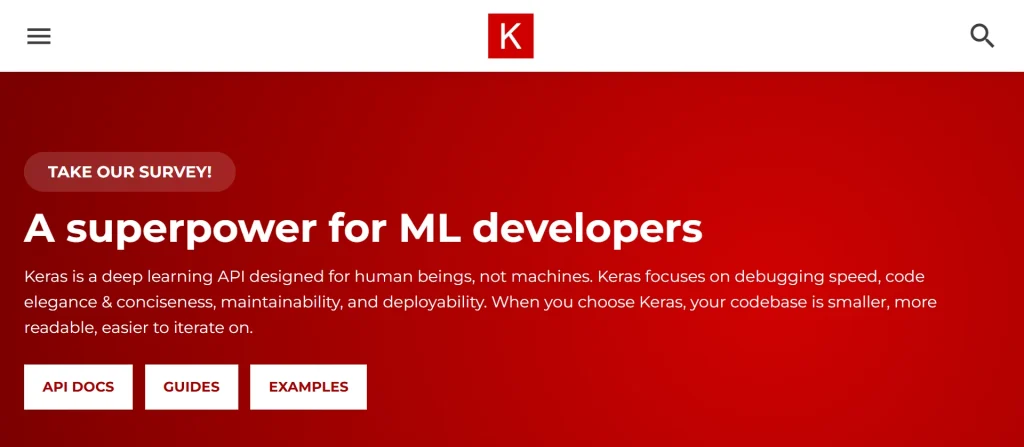
Keras is a high-level deep learning API renowned for facilitating fast experimentation and being incredibly easy to use. It functions as an interface for powerful deep learning libraries like TensorFlow, enabling developers to build and iterate on neural networks with exceptional speed.
Its user-friendly design, modularity, and clear documentation make it a fantastic choice for both beginners and seasoned experts. Keras is engineered to help users build sophisticated and powerful models quickly, making it a popular tool for a wide array of deep learning applications.
Keras Key Functions and Applications
Why Choose:
Choose Keras for its remarkable simplicity, fast prototyping capabilities, and user-friendly interface that makes deep learning accessible to everyone.
8. Dataiku
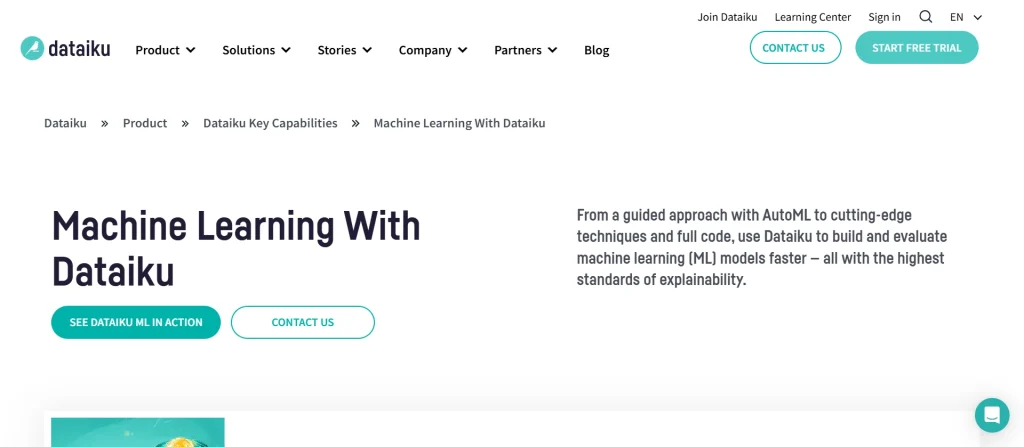
Dataiku is a unified, end-to-end platform for Everyday AI, designed to systematise the use of data for exceptional business outcomes. It offers a centralised and controlled environment that supports a diverse range of users, from business analysts to expert data scientists.
Its highly collaborative and visual, flow-based interface empowers teams to design, deploy, and manage AI and analytics applications together. Dataiku is built for enterprises aiming to democratise data science and embed AI into their core business processes for tangible results.
Dataiku Key Functions and Applications
Why Choose:
Choose Dataiku for its collaborative, end-to-end platform that empowers both technical and non-technical users to build enterprise-grade AI.
9. Apache Spark MLlib
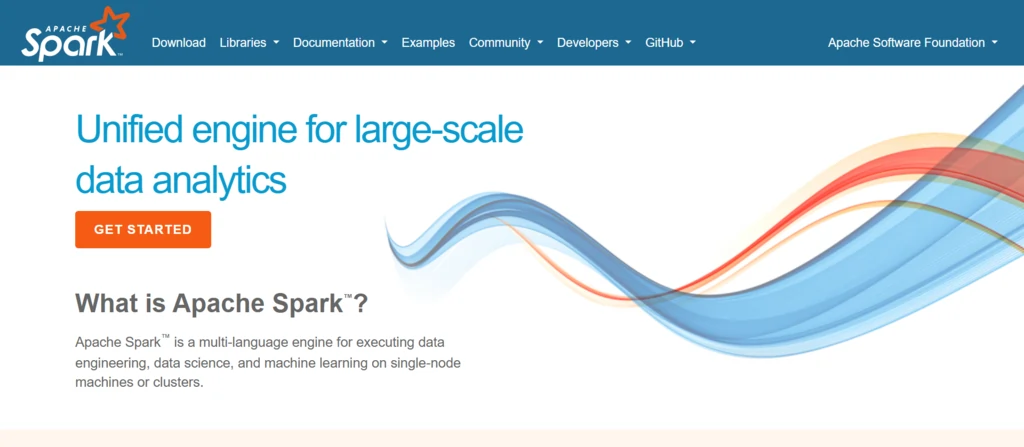
Apache Spark MLlib is Spark's scalable machine learning library, purpose-built to operate on large-scale distributed datasets. It furnishes a comprehensive suite of common machine learning algorithms and utilities, making it a powerhouse for data scientists working with big data.
Seamlessly integrated with the Spark ecosystem, MLlib enables the easy construction of ML pipelines that combine data transformation, feature engineering, and model training. It is the definitive choice for organisations needing to perform machine learning on massive datasets.
Apache Spark MLlib Key Functions and Applications
Why Choose:
Choose Apache Spark MLlib for its unparalleled ability to scale machine learning workflows on massive datasets within the Spark ecosystem.
10. H2O.ai
H2O.ai offers a leading AI cloud platform with a core mission to democratise AI for everyone. Its flagship products, the open-source H2O-3 platform and the automated machine learning solution Driverless AI, are used by data scientists and business users alike.
The platform is renowned for delivering fast, scalable, and easy-to-use machine learning. H2O.ai is dedicated to making AI accessible by providing powerful AutoML capabilities that help organisations accelerate their AI adoption and drive significant business impact.
H2O.ai Key Functions and Applications
Why Choose:
Choose H2O.ai for its powerful automated machine learning capabilities, incredible speed, and commitment to making AI accessible to all users.
How We Selected the Top Machine Learning Software | Our Methodology?
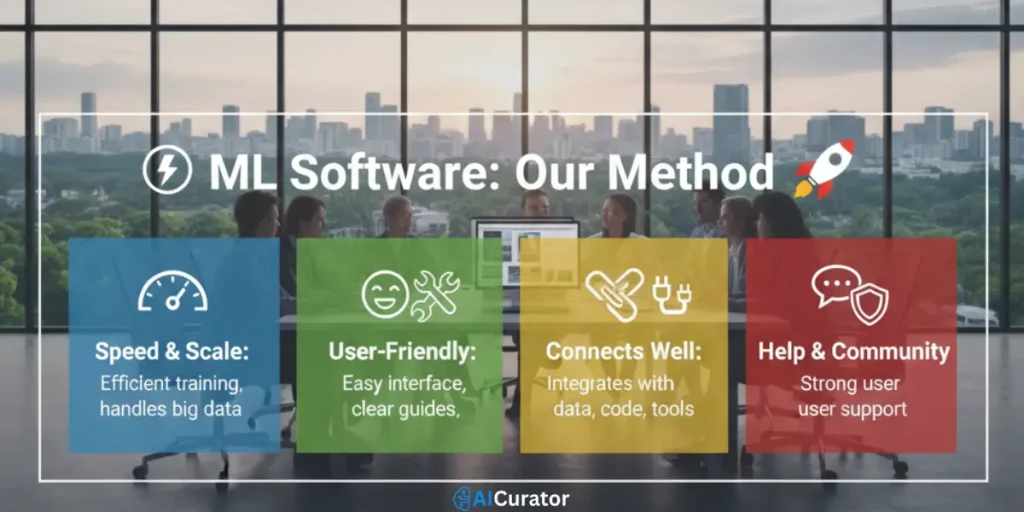
To select the top machine learning software, our evaluation focused on several key factors critical for performance, usability, and business value. We analysed each platform's core capabilities, including its support for various modelling techniques and its ability to handle large-scale data processing.
Our methodology included:
Your Next Steps Forward

Choosing the right machine learning software is the first step toward transforming data into powerful AI solutions.
The market offers a diverse range of options, from code-intensive frameworks designed for expert data scientists to intuitive, low-code platforms perfect for business users.
Each tool is built to address specific needs, whether it's large-scale data processing, advanced deep learning, or rapid prototyping. The best software is the one that aligns with your project's complexity and your team's expertise. Use this guide to make an informed decision and start building impactful AI today.

Recommended Readings: