OpenAI has launched GPT-5, a unified, reasoning-first model family now rolling out to all ChatGPT users, with APIs for developers and deep integrations across Microsoft’s stack.
The release shifts ChatGPT to a smarter default and introduces a real-time router that picks the best model behaviour for each prompt—fast replies for simple queries, deeper “thinking” for complex tasks.
Microsoft confirmed GPT-5 is available today across Copilot, GitHub Copilot and Azure AI Foundry, with enterprise safety and routing features baked in.
Key Takeaways
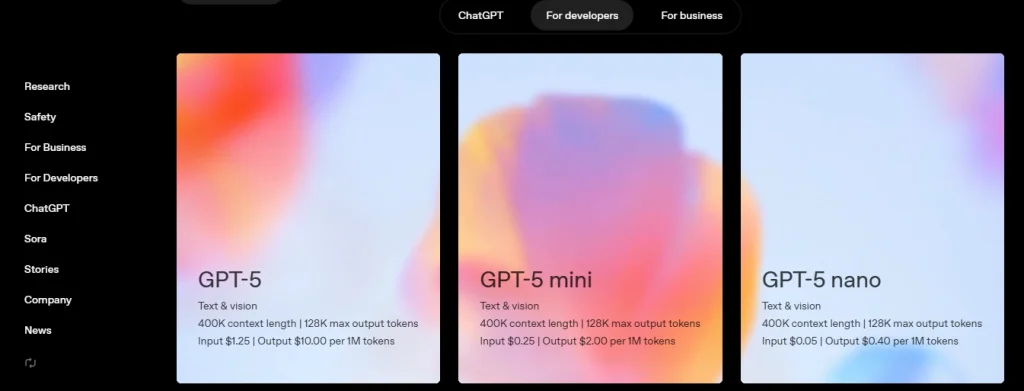
GPT-5 is available to everyone in ChatGPT; API tiers include GPT-5, GPT-5-mini and GPT-5-nano.
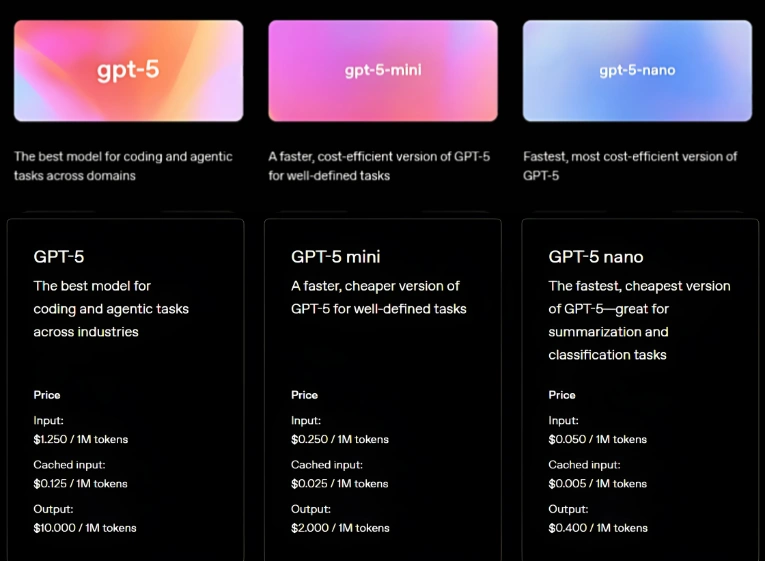
Pricing starts at $1.25/1M input tokens and $10/1M output tokens for GPT-5; mini and nano offer lower costs for latency-sensitive apps.
Real-time model routing, extended reasoning controls and larger contexts enable end-to-end coding, agentic workflows and more reliable answers.
Microsoft and GitHub have begun rolling out GPT-5 across Copilot products with security vetting and admin controls.
OpenAI says hallucinations are reduced and “safe completions” improve responses on sensitive queries.
What’s new in GPT-5?
OpenAI describes GPT-5 as its smartest, fastest, most useful model yet—with “thinking” built in—available to all ChatGPT users from launch. The system unifies fast generation with explicit reasoning, using a router that adapts to task complexity without manual model switching.
Microsoft says the model improves coding, chat and “agentic” tasks across Copilot products, with testing by the Microsoft AI Red Team highlighting strong safety performance against malware, fraud and related attacks.
Availability: Default in ChatGPT; API access for gpt-5, gpt-5-mini, gpt-5-nano; team/enterprise rollouts and GPT-5 Pro for extended reasoning are planned.
Use cases: End-to-end software generation, complex analytics, research briefs, calendar/task flows, and richer multi-modal chat.
Safety: Reduced hallucinations and “safe completions,” plus clearer refusal behaviours where needed.
OpenAI’s developer release confirms three core sizes in the API—GPT-5, GPT-5-mini, and GPT-5-nano—plus a chat-tuned variant.
GPT-5: Full reasoning model for deeper analytics and complex tasks.
GPT-5-mini: Faster reasoning for real-time apps and agent flows with tool use.
GPT-5-nano: Ultra-low-latency Q&A and lightweight reasoning.
GPT-5-chat-latest: Non-reasoning ChatGPT variant exposed via API with the same token pricing as GPT-5.
Microsoft notes context windows up to 272k tokens for GPT-5 in Azure AI Foundry and 128k for GPT-5 chat, supporting long documents and multi-turn workflows. GitHub Copilot has placed GPT-5 in public preview for paid plans across web, VS Code, and mobile.
Pricing, Rate Limits and Parameters
OpenAI has set aggressive pricing on GPT-5 compared to prior flagships and competitors.
Prompt caching and batch APIs can further cut costs on repeat contexts.
Key API Parameters and Capabilities:
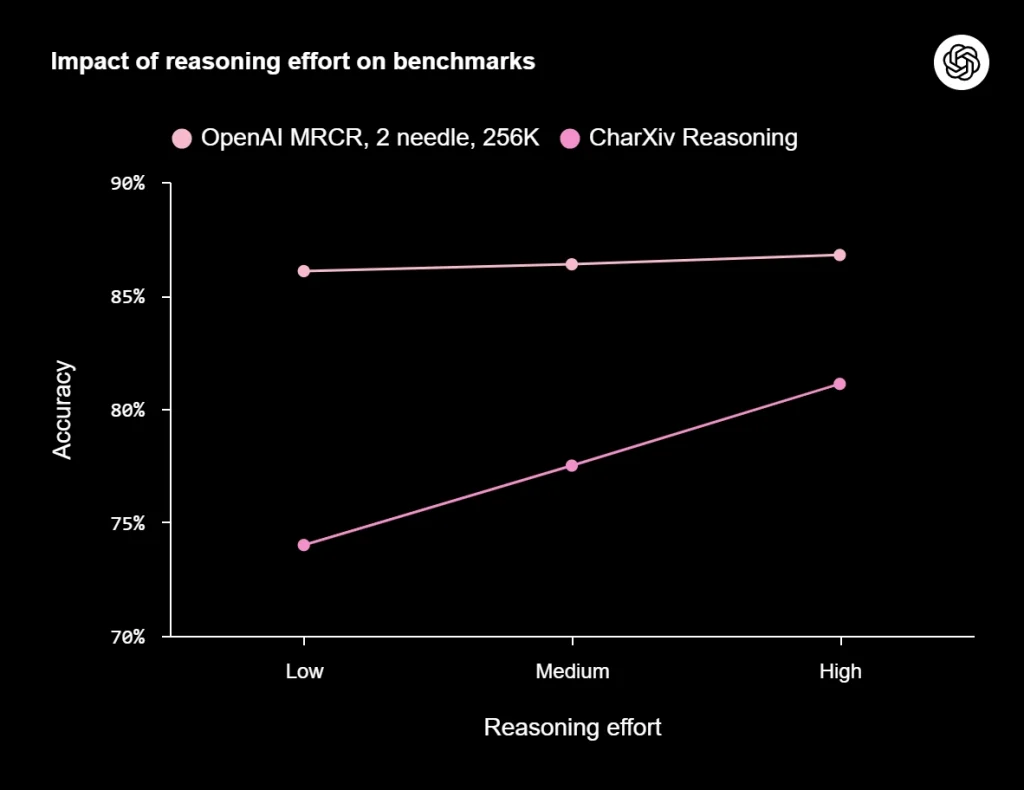
Reasoning_effort: Control how hard the model “thinks” (e.g., minimal to intensive).
Verbosity: Tune output detail for explanations and step-by-step answers.
Parallel tool calling and custom tools: Flexible, schema-light integrations with built-in tools like web search, file search, and image generation.
Streaming, structured outputs, and router-assisted model selection in Azure AI Foundry.
Benchmarks and Early Signals
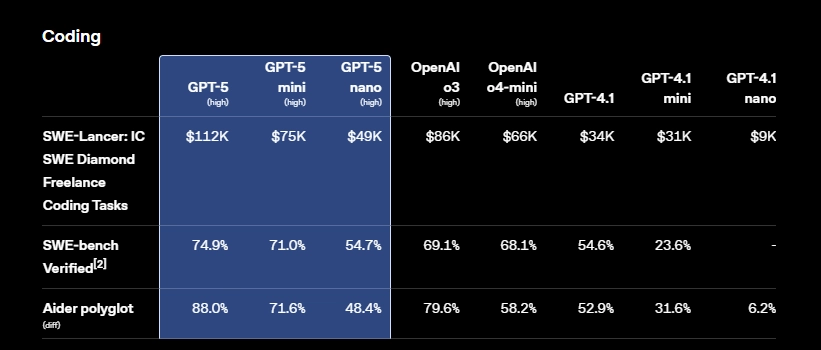
OpenAI and partners emphasise GPT-5’s stronger reasoning, coding, and reliability, with Microsoft citing extensive safety testing and Copilot gains.
Media reports note reduced hallucinations and improved expert-level performance claims, though some commentary frames the leap as evolutionary in daily UX. LM Arena leaderboards are widely watched, but official GPT-5 placements will depend on Arena updates and scoring windows.
CNBC: OpenAI claims fewer hallucinations and 5,000 hours of safety testing, with broader general availability to free users.
BBC: “PhD-level” expertise claims from OpenAI leadership; journalists observed improvements that feel iterative for end-users.
LM Arena: Maintains community-ranked leaderboard; check for GPT-5 entries as updates land.
What It Means for Users
GPT-5 includes a real-time router that decides the right approach for a prompt—fast answers for simple tasks and deeper chains of thought for complex ones. This reduces the need to pick models manually and makes ChatGPT feel more consistent across varied workloads.
In ChatGPT: Users interact normally; the system optimises response mode for speed or depth.
In Azure: Foundry’s model router ensures the best model is picked across GPT-5 family endpoints with enterprise-grade controls.
GPT-5 for Developers: Coding, Agents, and Long Tasks
OpenAI positions GPT-5 as its best model for coding and agentic tasks, with parallel tool calls and transparent reasoning improving reliability on long-running jobs. GitHub reports better end-to-end handling of complex coding tasks and clearer explanations in Copilot.
Long contexts: Up to 272k tokens (Azure), enabling large codebases and long documents in a single flow.
Safety and governance: Enterprise rollouts with policy controls, auditing and admin toggles for GPT-5 features.
Practical Setup: ChatGPT and API
ChatGPT access: GPT-5 is now default; Team rollout has started; Enterprise/Edu next week; GPT-5 Pro coming for deeper reasoning.
API setup: gpt-5, gpt-5-mini, gpt-5-nano available via Responses and Chat Completions APIs with reasoning_effort, verbosity, streaming, structured outputs, prompt caching, and batch API support.
Microsoft ecosystem: GPT-5 is live in Microsoft 365 Copilot, Copilot, GitHub Copilot and Azure AI Foundry with model router support.
What’s New in ChatGPT with GPT‑5
Default GPT‑5 with auto‑routing: One model, quick replies or “Thinking” mode as needed.
Faster, fewer errors: Big drop in hallucinations vs GPT‑4o and o3 when “thinking”.
Bigger memory: Up to ~256k tokens context in ChatGPT; higher via API variants.
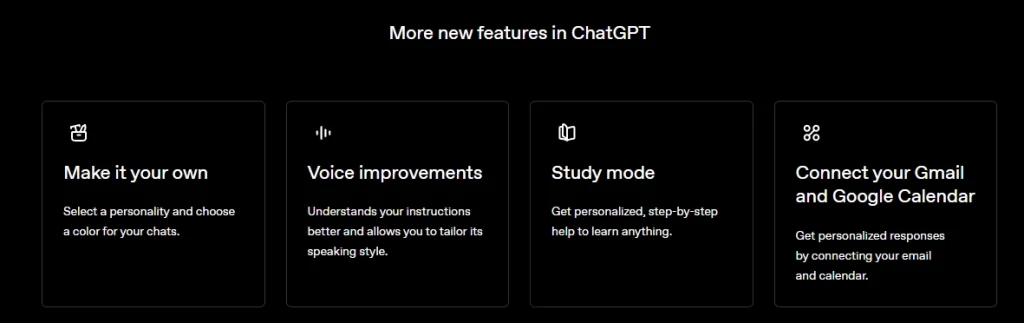
Voice upgrades: More natural voice and higher limits for paid tiers.
Personalisation: Preset text personalities (Cynic, Robot, Listener, Nerd) and UI tweaks.
Google integrations: Optional Gmail and Google Calendar connections rolling out.
Availability: Rolling out across Free, Plus, Pro, Team; Enterprise/Edu next.
Limitations and Expectations
Independent reporters note that while capability is up, day-to-day UX can feel like an evolution rather than a shock jump, which is typical as models mature. Community benchmarks like LM Arena will provide comparative signals as GPT-5 is added and tested over time.
Conclusion
GPT-5 resets ChatGPT to a smarter default while giving builders a clearer, cheaper path to deploy reasoning, agents and long-context workflows at scale.
With Microsoft shipping GPT-5 across Copilot and Azure, and GitHub enabling it for Copilot users, the upgrade lands both for consumers and enterprises at once. Pricing undercuts prior flagships, parameters give control over depth and speed, and early reports point to safer, more consistent outputs.